Successfully Percutaneous Treatment with Ethyl Alcohol in Multiple Hepatic and Extrahepatic Hydatid Cysts; Long Term Outcomes
SÜLEYMAN BAKDIK, MUHARREM KESKİN, BEKİR TURGUT
- Year : 2026
- Vol : 42
- Issue : 2
- Page :
127-134
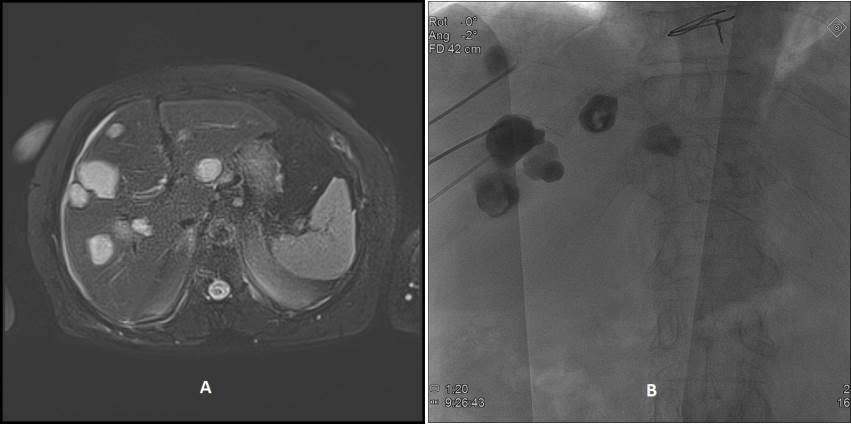
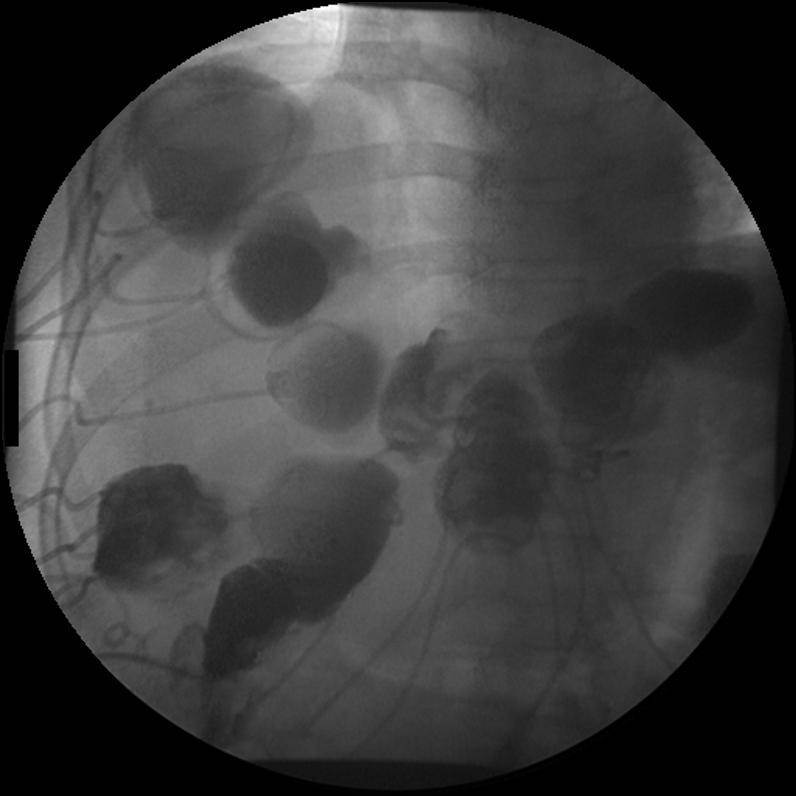
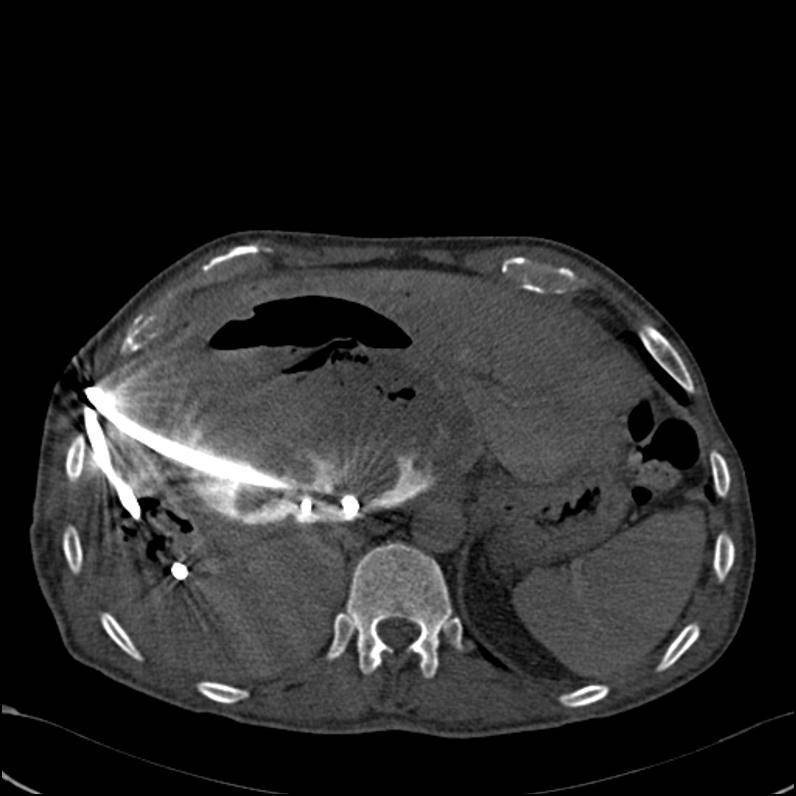
Objective: Hydatid cysts are primarily treated surgically, and surgical treatment is associated with high morbidity, mortality, and prolonged hospitalization. However, over the last two decades, minimally invasive percutaneous treatments that provide favorable outcomes with low morbidity and mortality have been developed. In this study, we aimed to demonstrate a percutaneous treatment for disseminated liver hydatid cysts (CE) and to evaluate the therapeutic success rates and the advantages of alcohol as a scolicidal and sclerosing agent. Materials and Methods: We retrospectively investigated 132 percutaneously treated CEs in 23 patients who were admitted with disseminated hepatic and extrahepatic CE between September 2016 and December 2018, each of whom had fewer than three cysts. CE type 1 (Gharbi type 1) and CE type 3a (Gharbi type 2) hydatid cysts measuring 6 cm were treated with catheterization (SPC). All CE cysts classified as types 2 and 3b (the latter corresponding to Gharbi type 3) were treated using the modified catheterization technique (MoCAT). Results: All 132 lesions in 23 patients were successfully treated percutaneously. The following observations were recorded: pseudotumor appearance in 80 cysts (60.61%); more than 50% reduction in cystic volume in 33 cysts (25%); thickening of the cyst wall, irregular cyst contours, and membrane detachment (numbers were not reported); less than 50% reduction in cystic volume in 10 cysts (7.58%); and complete disappearance in 9 cysts (6.82%). Conclusion: Percutaneous treatments are safe and effective for patients with disseminated hepatic and extrahepatic hydatid disease and should be considered first line therapy because surgical interventions are associated with high morbidity. When appropriate safety limits and precautions are observed, alcohol appears to be a safe and effective treatment for disseminated disease, demonstrating both scolicidal and sclerosing properties. Keywords: Disseminated hydatid cysts, ethyl alcohol injection, extrahepatic hydatid cysts, interventional radiology, percutaneous cyst treatment
Cite this Article As :
Bakdik S, Keskin M, Turgut B. Successfully Percutaneous Treatment with Ethyl Alcohol in Multiple Hepatic and Extrahepatic Hydatid Cysts; Long Term
Outcomes. Selcuk Med J 2026;42(2): 127-134
Download Citation: Endnote/Zotero/Mendeley (RIS) RIS File
Download Citation: BibTeX BibTeX File
Description :
None of the authors, any product mentioned in this article,
does not have a material interest in the device or drug. Research,
not supported by any external organization.
grant full access to the primary data and, if requested by the magazine
they agree to allow the examination of data.
Successfully Percutaneous Treatment with Ethyl Alcohol in Multiple Hepatic and Extrahepatic Hydatid Cysts; Long Term Outcomes
2026,
Vol.
42
(2)
Received : 04.09.2025,
Accepted : 09.01.2026,
Published Online : 17.06.2026
Selcuk Medical Journal
ISSN:1017-6616;
E-ISSN:2149-8059;



 Keywords